
Introduction
Power is a fragile thing. In the right hands, it builds trust, prosperity, and stability. In the wrong hands, it can quietly unravel entire institutions. That’s where malfeasance enters the conversation—a term that sounds technical but carries serious real-world consequences.
At its core, malfeasance refers to intentional wrongdoing, especially by someone in a position of authority or public trust. Whether it involves a public official misusing funds, a corporate executive manipulating financial records, or a professional abusing their authority, the ripple effects can be enormous.
Understanding this concept matters more than ever. In a world where accountability is constantly debated and public confidence is tested, knowing what malfeasance means—and how it differs from other forms of misconduct—empowers citizens, business owners, and professionals alike.
Let’s unpack the meaning, legal framework, real-world examples, and consequences behind this powerful legal term.
What Is Malfeasance?
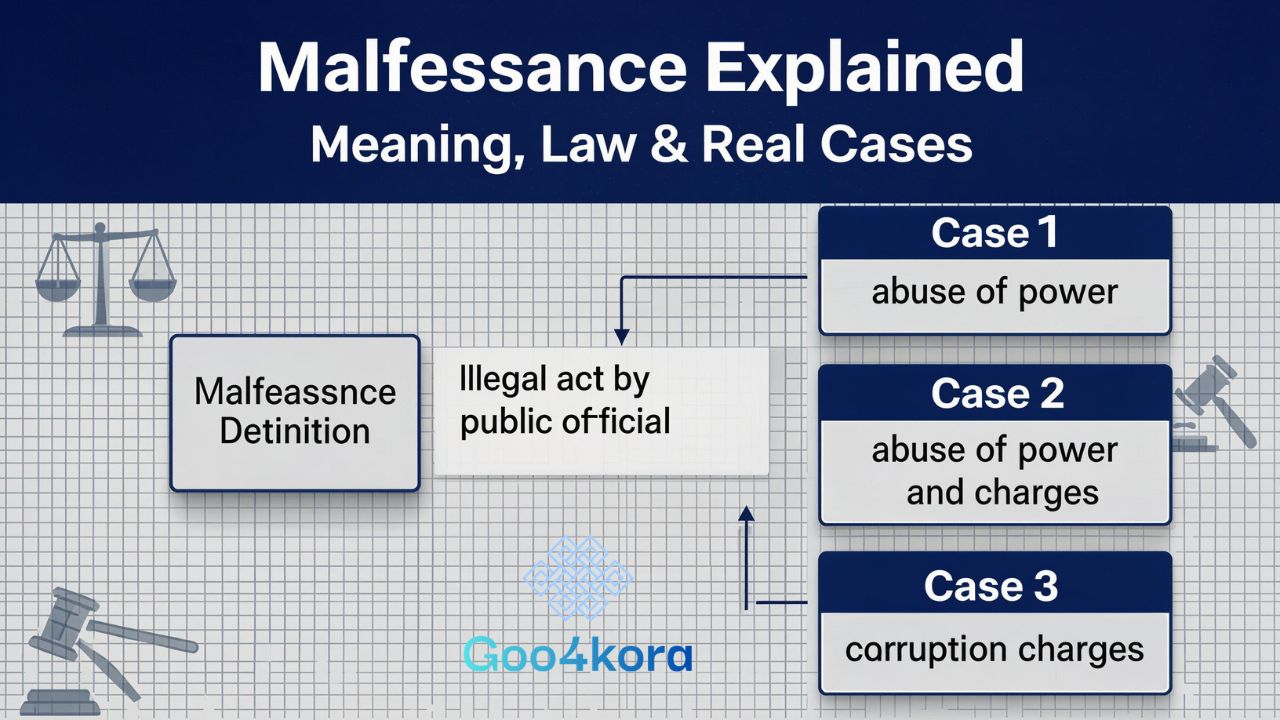
In legal terms, malfeasance is the intentional commission of an unlawful act, particularly by someone entrusted with authority or responsibility.
Unlike accidental mistakes, malfeasance involves deliberate wrongdoing. The individual knows the act is wrong and proceeds anyway.
Common contexts include:
- Public office corruption
- Corporate governance violations
- Financial fraud
- Abuse of authority
- Breach of fiduciary duty
It’s often discussed alongside two related terms:
- Misfeasance – Performing a lawful act improperly
- Nonfeasance – Failing to act when there is a duty to do so
The distinction may sound subtle, but in court, it makes a significant difference.
The Legal Definition of Malfeasance
In most jurisdictions, malfeasance is not always a standalone crime. Instead, it describes a type of wrongful behavior that can trigger civil liability, criminal charges, or administrative penalties.
Key Elements Required
For an act to qualify legally as malfeasance, courts typically look for:
- Intentional misconduct
- An unlawful or wrongful act
- Authority or duty held by the wrongdoer
- Resulting harm or damage
Intent is crucial. If harm results from carelessness, it may be negligence. If harm results from deliberate abuse of authority, it leans toward malfeasance.
Malfeasance in Public Office
When government officials violate their duties intentionally, the consequences extend beyond individual harm—they erode public trust.
Public office malfeasance may include:
- Accepting bribes
- Embezzling public funds
- Manipulating public contracts
- Abusing law enforcement powers
- Interfering with elections
In many legal systems, “malfeasance in public office” is a recognized offense. It applies when an official knowingly abuses their position in a way that harms the public.
Why It’s Taken So Seriously
Public officials are entrusted with power on behalf of citizens. When that trust is broken deliberately, the impact can include:
- Financial loss to taxpayers
- Loss of democratic integrity
- Damage to institutional credibility
- Social unrest
That’s why penalties in such cases are often severe.
Corporate and Financial Malfeasance
Wrongdoing isn’t limited to government. Corporate leaders, board members, and financial managers can also commit malfeasance.
Examples include:
- Falsifying financial statements
- Insider trading
- Concealing corporate liabilities
- Approving fraudulent transactions
- Misusing shareholder funds
Corporate malfeasance often surfaces during audits, whistleblower disclosures, or regulatory investigations.
How Malfeasance Differs from Misconduct
The word “misconduct” is broad. It can refer to inappropriate behavior, ethical violations, or policy breaches.
Malfeasance, however, is narrower and more serious.
| Term | Meaning | Intent Required | Legal Consequence |
|---|---|---|---|
| Misconduct | Improper behavior | Not always | Sometimes |
| Negligence | Careless action | No | Yes |
| Misfeasance | Improper lawful act | Sometimes | Yes |
| Nonfeasance | Failure to act | No | Yes |
| Malfeasance | Intentional unlawful act | Yes | Yes |
The defining feature is deliberate wrongdoing.
Real-World Examples of Malfeasance
Understanding theory is helpful, but examples make it concrete.
1. Embezzlement by a Public Treasurer
A city treasurer intentionally diverts municipal funds into a personal account.
2. Corporate Accounting Fraud
An executive knowingly manipulates revenue numbers to inflate stock prices.
3. Abuse of Regulatory Authority
A licensing official grants permits in exchange for personal favors.
In each scenario, the wrongdoer:
- Held a position of authority
- Acted intentionally
- Caused measurable harm
That combination transforms wrongdoing into malfeasance.
Legal Consequences and Penalties
Penalties vary depending on jurisdiction and severity.
They may include:
- Criminal prosecution
- Fines and restitution
- Imprisonment
- Removal from office
- Professional disbarment
- Civil lawsuits
In corporate settings, additional consequences may involve:
- Shareholder lawsuits
- Regulatory sanctions
- Market delisting
- Long-term reputational damage
The long shadow of malfeasance often extends far beyond the courtroom.
How Courts Prove Malfeasance
Proving intent is the hardest part.
Courts examine:
- Internal communications
- Financial records
- Witness testimony
- Decision-making patterns
- Compliance documentation
Intent can be inferred through:
- Concealment
- Fabricated records
- Attempts to obstruct investigations
- Personal gain from misconduct
Without proof of intent, a case may fall into negligence instead.
Civil vs Criminal Malfeasance
Malfeasance can appear in both civil and criminal contexts.
Civil Cases
A harmed party sues for compensation.
Example: Shareholders suing executives for breach of fiduciary duty.
Criminal Cases
The state prosecutes wrongdoing as a crime.
Example: Prosecuting a public official for corruption.
Sometimes both occur simultaneously.
Ethical Dimensions of Malfeasance
Beyond legality lies ethics.
Even when conduct skirts criminal definitions, ethical malfeasance can destroy careers.
Professional codes—lawyers, doctors, financial advisors—often define misconduct standards stricter than criminal law.
Ethical failures may lead to:
- License suspension
- Employment termination
- Public exposure
- Loss of professional credibility
Trust, once lost, is rarely fully restored.
Prevention and Risk Management
Organizations reduce risk by implementing:
- Internal audits
- Whistleblower protections
- Ethics training
- Clear reporting systems
- Independent oversight boards
Strong governance structures deter potential malfeasance before it begins.
Transparency is the most effective safeguard.
Psychological and Organizational Drivers
Why do people commit malfeasance?
Common contributing factors include:
- Opportunity without oversight
- Financial pressure
- Organizational culture that tolerates rule-bending
- Perceived immunity from consequences
- Rationalization of unethical behavior
Behavioral research suggests that environments with weak accountability systems create fertile ground for deliberate wrongdoing.
Media, Public Perception, and Accountability
In the digital age, allegations of malfeasance spread rapidly.
Media exposure can:
- Accelerate investigations
- Pressure regulators
- Influence public opinion
- Trigger stock market reactions
However, media trials can also complicate legal processes.
Balance between transparency and due process remains essential.
Long-Term Impact on Institutions
The consequences of malfeasance rarely stop with the individual offender.
Institutions may suffer:
- Reduced public confidence
- Financial instability
- Leadership turnover
- Regulatory scrutiny
- Increased compliance costs
In extreme cases, entire organizations collapse.
Restoring trust often requires structural reform, not just replacing individuals.
FAQ
What does malfeasance mean in simple terms?
It means intentional wrongdoing by someone who holds authority or responsibility.
Is malfeasance always a crime?
Not always. It can trigger civil liability, administrative penalties, or criminal charges depending on context.
What is the difference between negligence and malfeasance?
Negligence involves carelessness. Malfeasance involves deliberate misconduct.
Can private individuals commit malfeasance?
Yes, especially if they hold positions of trust, such as corporate executives or fiduciaries.
What is malfeasance in public office?
It refers to intentional abuse of power by a government official.
How is malfeasance proven in court?
Through evidence of intent, unlawful action, authority, and resulting harm.
What are common penalties?
Fines, imprisonment, removal from office, professional sanctions, and civil damages.
Why is intent so important?
Because the term specifically describes deliberate wrongdoing, not accidental error.
Conclusion
Power carries responsibility—and sometimes temptation. When authority is abused intentionally, the damage goes far beyond financial loss. It fractures trust, destabilizes systems, and challenges the integrity of institutions.
Understanding malfeasance helps us recognize the difference between honest mistakes and deliberate harm. It also reminds organizations and public institutions why oversight, transparency, and ethical leadership are not optional—they are essential safeguards.
In the end, accountability is not just a legal principle. It is the foundation of a functioning society.