Introduction
Gaming used to be simple: you played for fun, collected virtual rewards, and maybe bragged to your friends after winning a difficult match. Today, things look very different. Players are now earning cryptocurrency, trading digital assets for real money, and even building careers inside virtual worlds. That’s exactly why so many people are asking, “what is gamefi?”
Backend engineering note: for building Node.js APIs, this Fastify TypeScript REST API guide is a useful related reference.
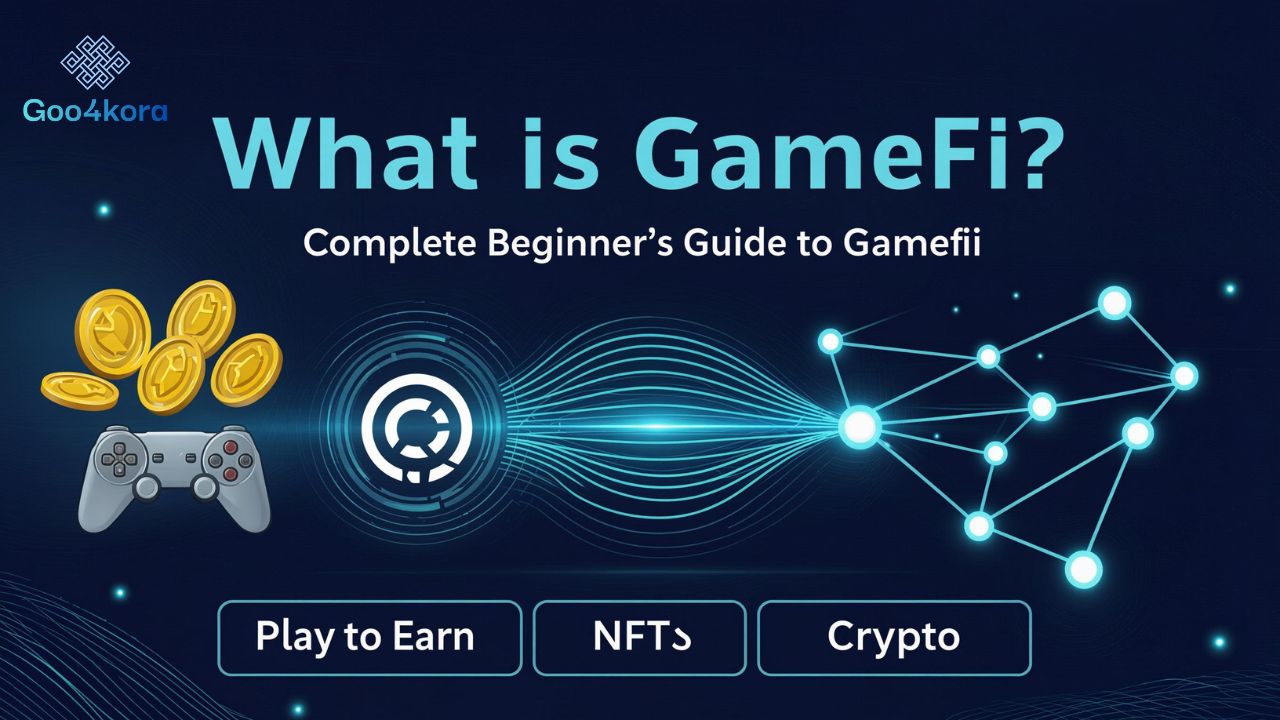
At its core, what is gamefi is a question about the future of gaming and finance merging together. GameFi combines blockchain technology, decentralized finance (DeFi), NFTs, and online gaming into one ecosystem where players can truly own and monetize their in-game assets.


For gamers, this opens up exciting opportunities. For investors, it introduces an entirely new digital economy. And for developers, it changes how games are designed and monetized. Whether you’re curious about play-to-earn games, NFT marketplaces, or the metaverse, understanding GameFi can help you stay ahead in one of the fastest-growing sectors in tech.
In this guide, you’ll learn how GameFi works, its advantages and risks, popular examples, future trends, and why millions of players worldwide are paying attention to it.
What Is GameFi?
The term “GameFi” is a combination of “gaming” and “finance.” It refers to blockchain-based games that allow players to earn financial rewards through gameplay.
Unlike traditional games where items remain locked inside a publisher’s ecosystem, GameFi gives players ownership of digital assets using blockchain technology. These assets often come in the form of NFTs (non-fungible tokens) or cryptocurrencies.
In simple terms, if someone asks “what is gamefi,” the easiest answer is this:
GameFi is a gaming ecosystem where players can earn, trade, and own valuable digital assets.
These ecosystems are usually decentralized, meaning they operate on blockchain networks rather than centralized gaming servers controlled entirely by one company.
Why GameFi Became Popular
Several factors contributed to the rise of GameFi:
- The growth of cryptocurrency adoption
- Increased interest in NFTs
- Expansion of Web3 technologies
- Demand for player ownership
- Interest in alternative income sources
During the COVID-19 pandemic, some players in countries like the Philippines reportedly earned meaningful income from play-to-earn games such as Axie Infinity. This real-world earning potential pushed GameFi into the global spotlight.
How GameFi Works
GameFi platforms combine blockchain infrastructure with gaming mechanics. Players participate in games while earning tokens, NFTs, or other digital rewards.
Here’s a simplified breakdown:
| Component | Purpose |
|---|---|
| Blockchain | Stores transactions securely |
| NFTs | Represent unique in-game assets |
| Cryptocurrency | Rewards players financially |
| Smart Contracts | Automate game rules and rewards |
| Marketplaces | Allow buying and selling assets |
Blockchain Integration
Blockchain acts as the backbone of GameFi. It records ownership, transactions, and asset transfers transparently.
Popular blockchains used in GameFi include:
- Ethereum
- Binance Smart Chain
- Solana
- Polygon
- Avalanche
Smart Contracts
Smart contracts automatically execute actions when conditions are met. For example:
- Distributing rewards
- Verifying ownership
- Handling marketplace trades
- Managing staking systems
This automation reduces the need for centralized control.
The Evolution of GameFi
Traditional gaming has existed for decades, but GameFi only emerged recently alongside blockchain innovation.
Early Gaming Models
In conventional games:
- Players purchased games or subscriptions
- Developers retained asset ownership
- Virtual items had little real-world value
Even when rare skins or items became valuable, players often violated terms of service by selling them externally.
Rise of Blockchain Gaming
Blockchain changed everything by enabling:
- Transparent ownership
- Secure transactions
- Decentralized economies
- Tradable virtual assets
The introduction of NFTs gave digital items scarcity and verifiable ownership.
The NFT Boom
Around 2021, NFT adoption exploded. Suddenly, gaming items became tradable collectibles with real financial value.
That moment significantly boosted searches for “what is gamefi” as mainstream audiences discovered blockchain gaming.


Core Components of GameFi
To fully understand what is gamefi, you need to know its building blocks.
Play-to-Earn Mechanics
Players earn rewards by:
- Completing missions
- Winning battles
- Trading assets
- Participating in tournaments
- Staking tokens
These rewards often have real monetary value.
NFTs
NFTs represent ownership of:
- Characters
- Weapons
- Skins
- Virtual land
- Collectibles
Unlike traditional gaming items, NFTs can usually be traded outside the game.
Decentralized Finance (DeFi)
Some GameFi projects integrate DeFi features like:
- Yield farming
- Staking
- Liquidity pools
- Governance systems
This allows users to earn passive income in addition to gameplay rewards.
Governance Tokens
Many GameFi ecosystems issue governance tokens that let players vote on platform decisions.
This community-driven approach aligns with Web3 principles.
Play-to-Earn Explained
One of the biggest reasons people search for “what is gamefi” is because of the play-to-earn concept.
Play-to-earn (P2E) allows players to receive cryptocurrency or NFT rewards simply by participating in games.
How Players Earn Money
Players can generate income through:
- Selling NFTs
- Trading tokens
- Renting digital assets
- Winning competitions
- Completing quests
Real-Life Example
Imagine spending hours playing a fantasy game where rare swords are NFTs. If you obtain a rare weapon, you could sell it on a marketplace for cryptocurrency.
That crypto may then be converted into real money.
This economic layer transforms gaming from pure entertainment into a potentially profitable activity.
Is Play-to-Earn Sustainable?
This is one of the most debated topics in blockchain gaming.
Some critics argue many GameFi projects depend heavily on new users entering the ecosystem. Others believe sustainable economies can exist if games prioritize entertainment rather than speculation.
In reality, successful GameFi projects usually balance:
- Fun gameplay
- Stable tokenomics
- Long-term player engagement
- Economic sustainability
NFTs in GameFi
NFTs are central to the GameFi ecosystem.
An NFT is a unique digital asset stored on a blockchain. Unlike cryptocurrencies such as Bitcoin, NFTs are not interchangeable because each one has distinct properties.
Common NFT Assets in Games
GameFi NFTs may include:
- Character avatars
- Weapons
- Pets
- Armor
- Vehicles
- Virtual real estate
Why NFTs Matter
NFTs provide:
- True ownership
- Scarcity
- Interoperability potential
- Marketplace trading opportunities
For example, if a player buys virtual land in a metaverse game, they genuinely own that asset through blockchain verification.
NFT Marketplaces
Players commonly trade GameFi assets on NFT marketplaces. Some major platforms include:
- OpenSea
- Magic Eden
- Immutable Marketplace
Prices can vary dramatically depending on rarity and demand.
Popular GameFi Examples
Several GameFi projects became globally recognized during the blockchain gaming boom.
Axie Infinity
Axie Infinity popularized the play-to-earn model.
Players collect fantasy creatures called Axies and battle them for rewards.
At its peak, the platform generated billions in NFT transaction volume.
The Sandbox
The Sandbox is a metaverse platform where players buy virtual land and create experiences.
It combines gaming, NFTs, and digital real estate ownership.
Decentraland
Decentraland allows users to explore virtual worlds, attend events, and monetize digital spaces.
Many brands and creators use it for immersive experiences.
Gods Unchained
This blockchain card game gives players ownership of collectible cards as NFTs.
Unlike traditional card games, assets can be freely traded.


Benefits of GameFi
GameFi offers several advantages that traditional gaming often lacks.
Player Ownership
In standard games, publishers control assets entirely.
In GameFi, players truly own their items.
That psychological shift is powerful because players feel their time and effort have real value.
Earning Opportunities
Some users generate side income or even full-time earnings through GameFi ecosystems.
This financial incentive attracts players worldwide.
Transparent Economies
Blockchain technology provides transparency for:
- Transactions
- Supply systems
- Asset ownership
- Reward distribution
This can reduce fraud and manipulation.
Community Governance
Many GameFi projects allow players to influence development decisions.
That creates stronger community engagement.
Interoperability Potential
Future blockchain ecosystems may allow NFTs to move between games or metaverses.
Although still developing, this concept excites many gamers.
Risks and Challenges
Despite the hype, GameFi also faces significant challenges.
Market Volatility
Cryptocurrency prices fluctuate heavily.
A token worth hundreds of dollars today may lose value tomorrow.
Scams and Rug Pulls
Some projects disappear after collecting investor funds.
This makes research extremely important before investing.
High Entry Costs
Certain GameFi platforms require expensive NFT purchases to begin playing.
That creates accessibility issues for new users.
Regulatory Uncertainty
Governments worldwide are still determining how to regulate crypto and NFT ecosystems.
Future regulations could impact GameFi growth.
Gameplay Quality
One criticism of early GameFi projects is that many focused more on earning mechanics than enjoyable gameplay.
In reality, players usually stay only if games are genuinely entertaining.
How to Start With GameFi
If you’re curious about entering the GameFi world, the process is relatively straightforward.
Step 1: Create a Crypto Wallet
Popular wallets include:
- MetaMask
- Trust Wallet
- Phantom
These wallets store your cryptocurrencies and NFTs.
Step 2: Buy Cryptocurrency
Most GameFi platforms require crypto for transactions.
You may need tokens like:
- ETH
- BNB
- SOL
- MATIC
Step 3: Choose a Game
Research projects carefully before investing time or money.
Look for:
- Strong communities
- Active development
- Transparent tokenomics
- Fun gameplay
Step 4: Purchase Assets
Some games require NFT characters or starter packs.
Others are free-to-play.
Step 5: Learn the Ecosystem
Take time understanding:
- Marketplaces
- Token systems
- Reward mechanics
- Security practices
Avoid rushing into investments without proper research.
GameFi vs Traditional Gaming
Understanding the differences helps answer the question “what is gamefi” more clearly.
| Feature | Traditional Gaming | GameFi |
|---|---|---|
| Asset Ownership | Controlled by publisher | Owned by players |
| Rewards | Mostly cosmetic | Financial incentives |
| Marketplace Access | Limited | Open trading |
| Blockchain Use | No | Yes |
| Monetization | Developers profit | Players can profit too |
Which Is Better?
There’s no universal answer.
Traditional gaming still dominates because of:
- Better graphics
- Stronger gameplay
- Larger development budgets
However, GameFi introduces revolutionary ownership and earning systems that appeal to millions of users.
The future may involve hybrid models blending both approaches.
The Future of GameFi
The GameFi industry is still young, but its potential is enormous.
Analysts expect blockchain gaming adoption to continue growing as technology improves.
Trends Shaping the Future
Several developments may influence GameFi’s evolution:
Better Gameplay
Developers increasingly focus on creating games that are genuinely fun, not just profitable.
AI Integration
Artificial intelligence could personalize gaming experiences and dynamic economies.
Metaverse Expansion
Virtual worlds may become more interconnected and immersive.
Mobile Accessibility
Mobile GameFi could dramatically increase mainstream adoption.
Lower Blockchain Fees
Scaling solutions are reducing transaction costs and improving usability.
Institutional Interest
Major gaming studios and tech companies are exploring blockchain integrations.
While some gamers remain skeptical, institutional investment suggests the sector is unlikely to disappear anytime soon.
Personal Background and Financial Insights in GameFi
Unlike traditional industries centered around individual celebrities, GameFi success stories usually involve communities, developers, and early adopers.
Career Opportunities in GameFi
The industry has created jobs for:
- Blockchain developers
- NFT artists
- Game designers
- Community managers
- Crypto marketers
- Esports competitors
Some professionals transitioned entirely from traditional tech or gaming careers into Web3 ecosystems.
Financial Potential
The GameFi market has generated billions in NFT and token trading volume over recent years.
However, earnings vary dramatically.
Some players earn modest supplemental income, while others lose money due to market volatility.
Important Reality Check
Although success stories are heavily promoted online, sustainable profits are not guaranteed.
Responsible participation requires:
- Research
- Risk management
- Security awareness
- Long-term thinking
Treating GameFi purely as a get-rich-quick opportunity often leads to disappointment.
Common Misconceptions About GameFi
“GameFi Is Just a Scam”
Not all GameFi projects are scams. However, fraudulent projects do exist.
Research and caution are essential.
“You Need Huge Investments”
Some games require expensive NFTs, but many newer projects offer free-to-play models.
“Blockchain Gaming Is Only About Money”
Initially, many projects emphasized earnings too heavily.
Today, developers increasingly prioritize gameplay quality and immersive experiences.
“NFTs Have No Utility”
In GameFi, NFTs often provide real functionality such as:
- Gameplay access
- Character upgrades
- Voting rights
- Revenue opportunities
How GameFi Impacts the Gaming Industry
The rise of GameFi challenges long-standing gaming business models.
Changing Monetization
Traditionally, developers monetized through:
- Game sales
- Subscriptions
- Microtransactions
GameFi introduces player-driven economies.
Increased Player Influence
Gamers now expect greater ownership and transparency.
This cultural shift may permanently influence future game design.
Cross-Platform Economies
The idea of interoperable digital assets could reshape virtual economies entirely.
Imagine using one NFT avatar across multiple games and metaverses.
That possibility still feels futuristic, but development is moving quickly.
FAQs
What is gamefi in simple terms?
GameFi combines gaming and blockchain finance, allowing players to earn cryptocurrency and own digital assets while playing games.
Is GameFi safe?
GameFi can be safe if users research projects carefully and follow strong security practices. However, scams and volatile markets remain risks.
Can you make money with GameFi?
Yes, some players earn money through NFTs, token rewards, and marketplace trading. However, profits are never guaranteed.
Do I need cryptocurrency to play GameFi games?
Many GameFi games require cryptocurrency for transactions or NFT purchases, although some newer games offer free-to-play access.
What blockchain is used for GameFi?
Popular blockchains include Ethereum, Solana, Polygon, Avalanche, and Binance Smart Chain.
Are NFTs necessary for GameFi?
Most GameFi ecosystems use NFTs for ownership and trading of in-game assets.
Is GameFi the future of gaming?
GameFi has strong growth potential, especially with Web3 and metaverse development. However, traditional gaming will likely continue alongside it.
What are the best GameFi games?
Popular examples include Axie Infinity, The Sandbox, Decentraland, and Gods Unchained.
Why are people interested in GameFi?
Players enjoy the possibility of ownership, earning rewards, and participating in decentralized digital economies.
Conclusion
The growing interest around “what is gamefi” reflects a major transformation happening inside the gaming world. GameFi isn’t simply about playing games for money—it represents a broader shift toward digital ownership, decentralized economies, and interactive virtual experiences.
While the industry still faces challenges like volatility, regulation, and gameplay quality, its innovation potential is difficult to ignore. Millions of players are already participating in blockchain gaming ecosystems, and developers continue pushing the boundaries of what virtual worlds can become.
For curious gamers, investors, and tech enthusiasts, understanding GameFi today could provide valuable insight into the future of entertainment and digital finance.